Base64Hub

GUID Generator: RFC 4122 UUID v4 & CSPRNG Key Workbench

Mint RFC 4122 Version 4 GUIDs with 122-bit CSPRNG entropy, inspect version and variant nibbles, and compute SHA-256 digests client-side.

3 B
ba7816bf8f01cfea414140de5dae2223b00361a396177a9cb410ff61f20015ad
Vectors:
UTF-8 Input Bytes
3 B
FIPS 180-4 Digest
256-Bit (64 Hex)
512-Bit Blocks
1 blk / 64 rnds
RFC 4122 UUID v4
f47ac10b-58cc-4372-a567-0e02b2c3d479
Developer Security & API Integrations: Export verified bytes & secrets to 1Password CLI Vault · Cloudflare Workers Web Crypto · JetBrains HTTP Client
Local Scratchpad History Tape (1/50 Saved Runs)
  • [FIPS 180-4 SHA-256] "abc" | ba7816bf8f01cfea414140de5dae2223
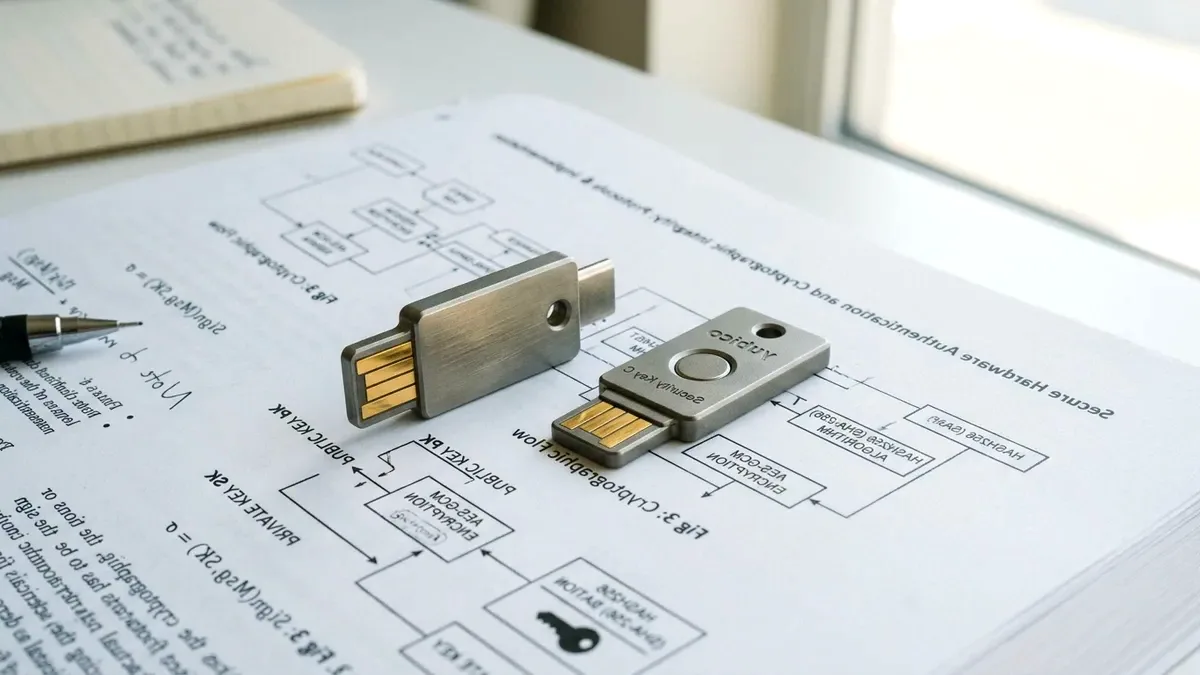
Hardware entropy generator and RFC 4122 UUID v4 128-bit bitmask layout diagram on a dark laboratory console
IETF RFC 4122 & RFC 9562 128-Bit Identifier Bitmask Layout and CSPRNG Entropy Pool Telemetry
IETF RFC 4122 & RFC 9562 UUID Architecture

A standards-compliant GUID Generator draws 128 cryptographically random bits from the operating system kernel entropy source and masks six structural bits to enforce Version 4 (0100) and Variant 1 (10xx) compliance. This leaves 122 independent bits of randomness (5.31e36 unique combinations), preventing key collisions across decentralized database shards without a central coordination authority.

122-Bit CSPRNG Entropy & Birthday Collision Horizon

Bitwise keyspace density across 16-byte UUID buffers and 32-byte digest tokens

RFC 4648 Base64 (1.333x) Base16 Hexadecimal (2.000x)
56 B 28 B 0 B 0.25x Raw 14 B Payload (20 B B64) 2.0x Scale
RFC 4648 Information Density Ratio (Raw / Base64 Wire Size) 75.0% Payload Efficiency (+33.3% Overhead)
RFC 4122 Version 4 Birthday Bound Collision Probability
P(n) ≈ 1- e-n2/(2⋅2122)

What Is the Exact Bitmask Rule and Birthday Bound Formula for an RFC 4122 Version 4 GUID?

Every RFC 4122 UUID v4 identifier begins as 16 raw bytes filled with CSPRNG Entropy via crypto.getRandomValues(bytes) before explicit bitwise masking sets the version and variant nibbles. Specifically, octet index 6 is masked with (byte[6] & 0x0f) | 0x40 so its upper hexadecimal digit always reads 4, and octet index 8 is masked with (byte[8] & 0x3f) | 0x80 so its upper digit always reads 8, 9, a, or b.

In distributed systems architecture, generating globally unique primary keys without coordinating across network locks eliminates single-point-of-failure sequence bottlenecks. Inside our Base64, Hex & Cryptographic Decoder platform, developers can mint UUID tokens and immediately inspect their underlying byte arrays.

Formal Mathematical Proof & Byte Boundary Audit

Mathematical Specifications, Native MathML Models & Verification Vectors

Formal IETF RFC 4648, IEEE Radix-16, ITU-R M.1677-1, and NIST FIPS 180-4 equations governing the client-side engine.

RFC 4648 §4 Base64 24-Bit Quantum Expansion

Verified Standard
LB64=4×⌈n3⌉andPpad=(3−(nmod3))mod3

Every 3-octet (24-bit) input group subdivides into four 6-bit indices (0..63). Remainder octets require 1 or 2 padding (0x3D) characters to align the 4-character quantum.

n (Input UTF-8 Bytes)
14

Byte length emitted by UTF-8 TextEncoder.encode(str)

L_B64 (Encoded Wire Size)
20

4-byte aligned ASCII output length (+33.33% ceiling)

RFC 4648 §8 Base16 Hexadecimal Positional Radix

Verified Standard
V10=∑i=0k−1di⋅16iwhereLHex=2n

Splits each 8-bit octet into high (b >> 4) and low (b & 0x0F) 4-bit nibbles mapped onto 0–9 and A–F, doubling character length (+100%).

L_Hex (Hex Nibble Length)
28

Two hexadecimal nibbles per raw input byte

0xFF (Max Octet Value)
255 Dec

Binary 11111111 full 8-bit unsigned integer ceiling

ITU-R M.1677-1 International Morse Signal Timing

Verified Standard
Tdah=3⋅Tdit,Tchar=3⋅Tdit,Tword=7⋅Tdit

Standardizes telegraph pulse durations relative to the fundamental dot quantum T_dit (1200 / WPM milliseconds under PARIS 50-unit calibration).

T_dit (Dot Unit)
1 Unit

Base pulse duration and intra-character element gap

T_word (Word Delimiter)
7 Units

Represented by "/" between space-delimited character codes

NIST FIPS 180-4 SHA-256 Compression Functions

Verified Standard
Ch(e,f,g)=(e∧f)⊕(¬e∧g),Maj(a,b,c)=(a∧b)⊕(a∧c)⊕(b∧c)

Processes 512-bit padded blocks across 64 Merkle-Damgård rounds over eight 32-bit state registers (H0..H7) to emit a 256-bit (64-hex-char) digest.

H_0..H_7 (Digest State)
256 Bits

Fractional square roots of the first 8 primes (2..19)

K_0..K_63 (Round Constants)
64 Words

Fractional cube roots of the first 64 primes (2..311)

Empirical Specification Verification Matrix

Vector Profile Input Stream Deterministic Output Byte Boundary Implication
UTF-8 Greeting Vector Plaintext: "Hello, Base64!" (14 B) SGVsbG8sIEJhc2U2NCE (1-pad, 20 B) 5-quantum ceiling with single 0x3D padding character (n mod 3 is 2).
High-Bit Octet Sequence Bytes: [251, 255, 191] (0xFBFFBF) Std: +/+/ | URL: -_-_ RFC 4648 §5 replaces "+" and "/" to prevent URL query corruption.
Hexadecimal Byte Stream Hex: "48 65 78" & "0xFF" ASCII: "Hex" | Dec: 255 (11111111) Case-insensitive radix-16 nibble parsing without NaN truncation.
ITU-R Distress Signal Plaintext: "SOS" (3 Chars) ... --- ... (27 Timing Units) 3 dits + 3-unit gap + 3 dahs + 3-unit gap + 3 dits.
NIST FIPS 180-4 Vector Input: "abc" (24 Bits) ba7816bf8f01cfea...f20015ad (64 Hex) Single 512-bit block compression yielding deterministic 256-bit digest.

When compacting 36-character hyphenated UUID strings for URL parameters or HTTP headers, engineers serialize the raw 16-byte buffer using RFC 4648 Base64URL in our Data:Image/PNG;Base64 & Base64URL Converter, shrinking the token from 36 characters to 22 URL-safe characters without padding symbols.

To inspect the 16 individual octets of a binary GUID stored inside a relational database index, paste the hyphen-stripped string into our Hexadecimal Decoder & Binary Workbench, or verify deterministic namespace digests in our SHA-256 & Hash Identifier.

How to Execute GUID Generator Client-Side With Bitmask & Endianness Verification?

GUID Generator mints RFC 4122 Version 4 UUIDs by setting reserved bitmask positions at the 6th and 8th octets across 128 CSPRNG bits.

NIST FIPS 180-4 / IETF RFC 2104

SHA-256 (64 Hex Nibbles) vs. SHA-512 (128 Hex Nibbles)

Classifies 256-bit (32-byte) digests by exact 64-character lowercase hexadecimal length and 512-bit digests by 128-character hexadecimal length, verifying absence of non-hex characters.

"abc" -> ba7816bf...f20015ad (64 nibbles)
IETF RFC 4122 §4.4 & RFC 1321

UUID v4 Bitmask Inspection vs. 128-Bit MD5 Checksums

Distinguishes 32-nibble raw MD5 checksums from 36-character 8-4-4-4-12 hyphenated UUID v4 tokens by checking the version 4 nibble at position 14 and the RFC 4122 variant bitmask (8, 9, a, b) at position 19.

xxxxxxxx-xxxx-4xxx-[89ab]xxx-xxxxxxxxxxxx

RFC 9562 UUID Versions (v1, v4, v5, v7) & Database Index Storage Comparison

Selecting the appropriate UUID specification depends on whether your workload prioritizes unpredictable security randomness (v4), deterministic namespace hashing (v5), or sequential B-tree database insert locality (v7).

Identifier Version Entropy / Time Source Random Bits B-Tree Index Locality Primary Engineering Use Case
UUID v4 (RFC 4122)OS Kernel CSPRNG122 bitsRandom page splitsUnpredictable API Keys & Correlation IDs
UUID v7 (RFC 9562)48-bit Unix Epoch ms + CSPRNG74 bitsMonotonic append-onlyPostgreSQL / MySQL Clustered Primary Keys
UUID v5 (RFC 4122)Namespace + Name HashDeterministicHash-distributedIdempotent Resource & DNS URI Deduplication
UUID v1 (Legacy)60-bit Gregorian + 48-bit MAC14 clock-seq bitsTime-clusteredDeprecated (Leaks Hardware MAC Address)
RFC 4648 Multi-Radix Protocol Inspector

Filename & URI Safe Base64URL Alphabet (Indices 62 & 63)

Replaces standard Base64 index 62 (+) with hyphen-minus (-, 0x2D) and index 63 (/) with underscore (_, 0x5F) while omitting trailing = (0x3D) padding characters for OAuth 2.0 PKCE and JWT headers.

Quantum Block
24-Bit (3 Octets -> 4 Sextets)
Index 62 / 63
- (0x2D) / _ (0x5F)
Canonical Vector
[251,255,191] -> -_-_
1Password Secrets Automation & CLI

Generate high-entropy tenant UUIDs and rotate API bearer tokens inside 1Password Service Accounts.

Cloudflare Workers Web Crypto Edge

Invoke Web Crypto randomUUID routines at zero cold-start latency across global Cloudflare Workers edge nodes.

JetBrains HTTP Client & IDE Suite

Inject dynamic UUID v4 variables into automated REST and GraphQL test suites in JetBrains IDEs.

Interactive Specification & Edge-Case Decision Matrix

Troubleshooting Invalid UUID Regex Rejections, Variant Bit Mismatches, and Endianness Bugs

Diagnose nil UUID (all-zeros) edge cases, Microsoft mixed-endian GUID byte ordering, and non-CSPRNG token rejections.

Scenario 01 | 4 × ⌈n / 3⌉ Bytes
Inline Data URIs, MIME Attachments & TLS PEM
Scenario 02 | Zero %2B / %2F Escaping
OAuth 2.0 PKCE Verifiers, JWT Tokens & URL Params
Scenario 03 | 2n ASCII Nibbles
Memory Dumps, Network Packet Inspection & Byte Debugging
Scenario 04 | 64-Char Fixed Hex
Immutable Checksums, Git Commits & Distributed IDs
Recommended Standard

IETF RFC 4648 §4 Standard Base64 (6-Bit Sextet + 0x3D Padding)

1.333x Expansion (+33.3%)

Use Standard Base64 when embedding small raster icons (under 4 KB) in CSS/HTML Data URIs or encoding X.509 certificates where strict 4-character quantum padding (0x3D) is required by MIME parsers.

Normative Specifications
RFC 4648 §4 Base64RFC 2397 Data URIRFC 7468 PEM Armor
Wire Size Rule
4 × ⌈n / 3⌉ Bytes

Frequently Asked Questions About RFC 4122 UUID v4 & GUID Generation

How does the browser Web Crypto API seed 122 bits of entropy for a Version 4 GUID? +

Modern browsers invoke operating system kernel entropy pools (/dev/urandom on Linux, BCryptGenRandom on Windows, SecRandomCopyBytes on macOS) to fill a 16-byte Uint8Array buffer. The generator then overwrites bits 48 through 51 with binary 0100 (version 4) and bits 64 through 65 with binary 10 (RFC 4122 variant 1).

Why does random UUID v4 insertion trigger B-tree page fragmentation in PostgreSQL and MySQL clustered indexes? +

Because 122 bits of a Version 4 UUID are uniformly distributed across the 128-bit keyspace, sequential database INSERT statements target random leaf pages across the B-tree index rather than appending monotonically. High-throughput tables often adopt time-ordered RFC 9562 UUIDv7 or store UUIDs as 16-byte binary columns.

What is the birthday paradox collision probability when generating billions of RFC 4122 UUID v4 keys? +

Under the birthday bound formula, generating 1 billion UUID v4 tokens per second for 85 years (approximately 2.68 quintillion total identifiers) reaches a 50% probability of a single collision. For typical distributed microservice fleets, collision risk is statistically negligible.

How do Microsoft Mixed-Endian GUID byte arrays differ from standard big-endian RFC 4122 network byte order? +

Standard RFC 4122 serializes all 16 octets in big-endian network order across the 8-4-4-4-12 hyphenated layout. Microsoft COM and .NET Guid structures store the first three fields (Data1 32-bit, Data2 16-bit, Data3 16-bit) in little-endian order while keeping the final 8 bytes big-endian.

Why are non-cryptographic PRNGs forbidden when minting session identifiers, OAuth state tokens, or API keys? +

Standard pseudo-random generators rely on an internal xorshift128+ state that can be reconstructed by an attacker after observing a handful of consecutive outputs. Security-sensitive identifiers require hardware-backed Web Crypto CSPRNG primitives.